The Founders' Lawyer
Unanimous Shareholder Agreement
A unanimous shareholder agreement is one of the most powerful tools in Canadian corporate law. It allows shareholders to restrict the powers of directors and take direct control of corporate management. Here's what you need to know.
What is a unanimous shareholder agreement?
A unanimous shareholder agreement (USA) is a specific legal instrument recognized under Canadian corporate statutes — section 146 of the Canada Business Corporations Act (CBCA) and section 108 of the Ontario Business Corporations Act (OBCA). It is not simply a shareholder agreement that happens to be signed by everyone.
The defining feature of a USA is its power to restrict the authority of the corporation's directors. Under normal corporate governance, directors manage the business and affairs of the corporation. A USA takes some or all of that management power away from the directors and places it directly in the hands of the shareholders.
This is a fundamental shift in how the corporation operates. In a standard corporate structure, shareholders elect directors and directors run the company. Under a USA, shareholders can run the company themselves — or at least control the decisions that matter most to them.
The "unanimous" part is critical. A USA must be agreed to by all shareholders of the corporation. If even one shareholder doesn't sign, the agreement cannot qualify as a USA under the statute. It would instead be a regular shareholder agreement, which has no power to restrict director authority.
The Legal Distinction
Why a USA is different from a regular shareholder agreement
A regular shareholder agreement is a private contract. It binds the parties who sign it, and it governs their relationship as shareholders — equity, voting, share transfers, dispute resolution, exit mechanisms. But a regular shareholder agreement does not change the corporate governance structure. Directors retain their full statutory authority.
A USA operates at a different level. When a USA restricts a director's power, that restriction has statutory force. The directors simply cannot exercise the restricted powers — not because of a contract between shareholders, but because the statute says so. This is what makes a USA uniquely powerful under Canadian law.
There's an important consequence to this power shift: under both the CBCA and the OBCA, shareholders who assume director powers through a USA also assume the corresponding liabilities and obligations. If you take the power to manage the company's finances, you also take on the duty of care and fiduciary obligations that would have applied to the directors in exercising those powers.
This is not a minor point. Shareholders in a USA structure need to understand that with management power comes management responsibility — including potential personal liability in certain circumstances.
Key Provisions
What goes into a unanimous shareholder agreement
A USA addresses many of the same topics as a regular shareholder agreement, plus provisions specific to the restriction of director powers.
Restriction of Director Powers
The core of any USA. Which director powers are restricted? All of them or only specific ones? This must be drafted precisely — vague language risks the agreement not qualifying as a USA under the statute.
Shareholder Management Rights
How the shareholders will exercise the management powers they've assumed. Decision-making procedures, voting thresholds, meeting requirements and delegation authority all need to be defined clearly.
Transferred Obligations
When shareholders assume director powers, they also assume the corresponding duties and liabilities. The USA should clearly identify which obligations transfer and how shareholders will fulfil them.
Binding on Future Shareholders
A USA binds anyone who later acquires shares in the corporation. The agreement must address how new shareholders are notified and how the USA is disclosed on share documentation issued by the corporation.
Standard Shareholder Provisions
Like any shareholder agreement, a USA also typically covers equity and ownership, share transfer restrictions, dispute resolution, exit mechanisms and other provisions governing the shareholder relationship.
Amendment & Termination
How the USA can be amended or terminated. Since a USA requires unanimity, amendments typically require the consent of all shareholders as well. The process for termination — and what happens to corporate governance when the USA ends — must be addressed.
When You Need One
Practical scenarios where a USA makes sense
Closely-Held Corporations
When the shareholders and the directors are the same people, the distinction between shareholder and director roles can feel artificial. A USA formalizes the reality that the shareholders are managing the business directly, and provides the legal framework for that structure.
Family Businesses
Family corporations often want shareholders — especially senior family members — to retain direct control over key decisions like asset sales, new share issuances and major contracts, regardless of who sits on the board.
50/50 Partnerships
When two shareholders each own half the corporation, deadlock is a constant risk. A USA can define decision-making procedures, tie-breaking mechanisms and exit provisions that prevent paralysis.
Investor Protection
Some investors require a USA to ensure they have direct control over certain corporate decisions — capital calls, dividend policy, executive compensation — rather than relying on board representation alone.
USA vs. Regular Shareholder Agreement
Which do you need?
Most early-stage startups start with a regular shareholder agreement. It covers equity, vesting, decision-making, transfers and exits — and that's usually all a startup needs in the early days. The directors (who are typically also the founders) retain their statutory authority to manage the business.
A USA becomes relevant when shareholders want direct, statutory control over management decisions. This is more common in closely-held corporations, family businesses, 50/50 partnerships and situations where passive investors want governance protections beyond board seats.
If you're not sure which structure is right for your corporation, book a consultation and we'll walk you through the options. The right answer depends on your specific shareholders, your corporate structure and your goals. If you're in the early startup stage, our founders agreement page may also be helpful.
Common Questions
Frequently asked questions
What is the difference between a USA and a regular shareholder agreement?
A regular shareholder agreement is a private contract between shareholders that governs their relationship. A USA is a statutory instrument under the CBCA (s. 146) or OBCA (s. 108) that restricts the powers of directors and transfers those powers to shareholders. A regular shareholder agreement cannot restrict director powers — only a USA can.
Does a USA need to be signed by all shareholders?
Yes. By definition, a unanimous shareholder agreement must be agreed to by all shareholders. If even one shareholder doesn't sign, it cannot qualify as a USA under the statute and cannot restrict director powers. It would be a regular shareholder agreement instead.
What happens when new shareholders join?
Under both the CBCA and OBCA, a USA is binding on anyone who later acquires shares in the corporation. The corporation must note the existence of the USA on share documentation. New shareholders are deemed to be party to the agreement by acquiring shares. This ensures the USA remains enforceable as ownership changes over time.
Can directors still act if there is a USA in place?
Yes — in any area not restricted by the USA. A USA can restrict some or all director powers. Where powers are not restricted, directors continue to exercise them normally. Where powers are restricted, the shareholders assume both the authority and the corresponding liabilities.
Do I need a lawyer to draft a unanimous shareholder agreement?
Strongly recommended. A USA is a statutory instrument that alters the governance structure of your corporation. If the language doesn't properly restrict director powers under the statute, the agreement may not qualify as a USA — which means it can't do the one thing it's supposed to do. Book a consultation and we'll advise on whether a USA is right for your situation.
Free Download
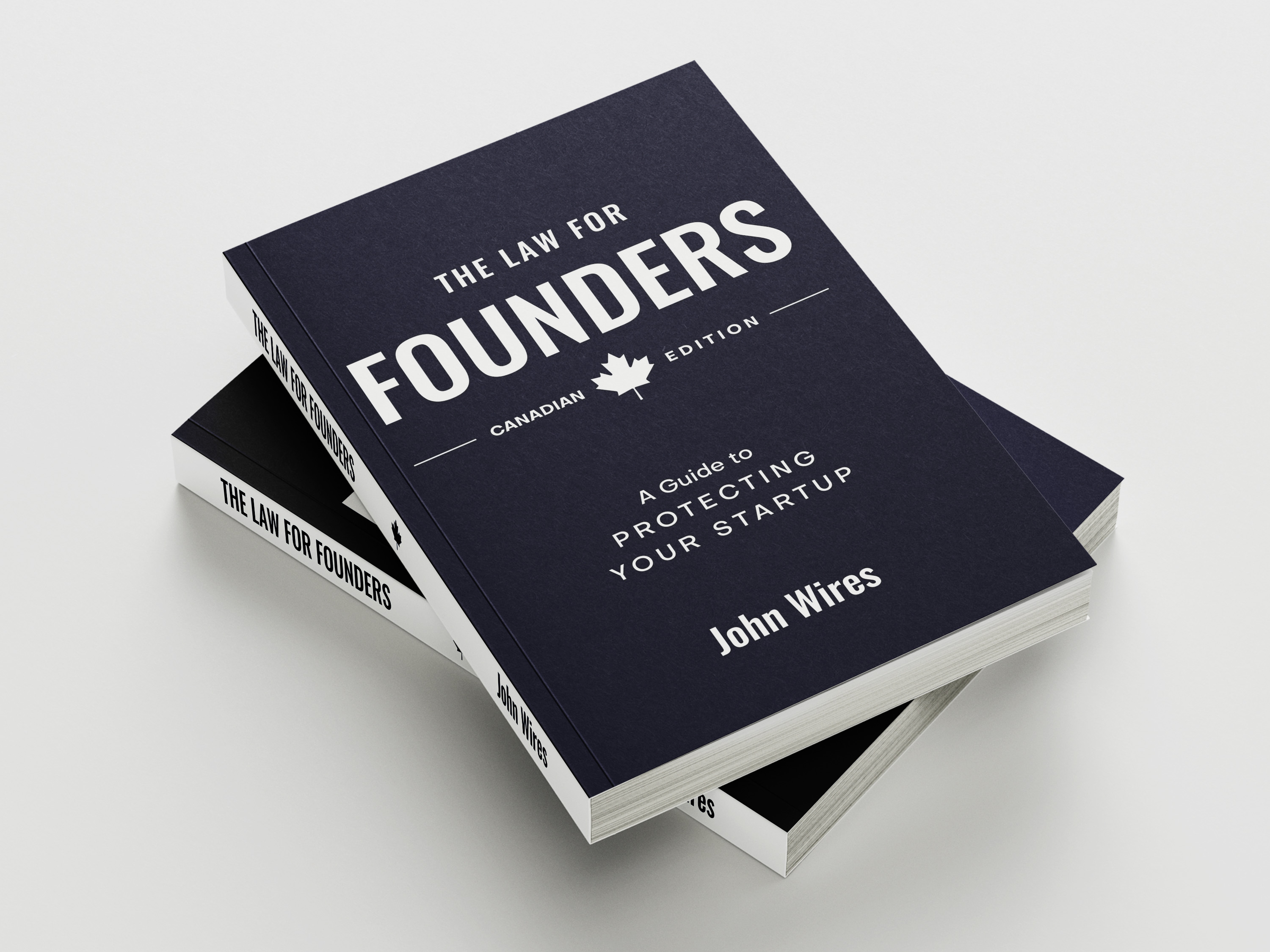
The Law for Founders
Our free book covers corporate governance, shareholder agreements and the fundamentals of Canadian corporate law. Written in plain language for founders and business owners, not just lawyers.