The Founders' Lawyer
Shareholder Agreement Lawyer
Every corporation with two or more shareholders needs a shareholder agreement. It's the document that prevents misunderstandings, protects everyone's investment and keeps the business running when things get complicated.
What is a shareholder agreement and why does it matter?
A shareholder agreement is a private contract between the shareholders of a corporation. It sets out the rules for how the business will be governed, how decisions get made, what happens when someone wants to leave and how disputes are resolved. Think of it as the operating manual for your business partnership.
Without one, you're relying entirely on the default rules in the Canada Business Corporations Act (CBCA) or the Ontario Business Corporations Act (OBCA). Those default rules weren't written for your specific business. They don't address vesting, they don't prevent deadlocks and they don't give you a clean exit mechanism when a co-founder decides to walk away.
The conversation about a shareholder agreement is easier to have when everyone is getting along. Once there's a dispute on the table, the negotiating dynamic changes completely. That's why we tell every founder the same thing: get your shareholder agreement done early, while everyone is still excited about the business and willing to be fair.
If you have co-founders, you may also want to explore a founders' agreement, which covers the pre-incorporation stage and is often combined with a shareholder agreement once the corporation is set up.
Key Provisions
What goes into a shareholder agreement
Every shareholder agreement is different, but here are the core provisions we address in most agreements.
Equity & Ownership
How ownership is divided among shareholders, what share classes exist, how new shares can be issued and what rights attach to each class. This is the foundation of the entire agreement.
Vesting Schedules
A vesting schedule means shareholders earn their equity over time rather than receiving it all upfront. The standard is four years with a one-year cliff, which protects the company if someone leaves early.
Decision-Making & Voting
Which decisions require a simple majority, which require a supermajority and which require unanimous consent. This prevents deadlock and ensures the business can actually operate.
Share Transfer Restrictions
Right of first refusal, tag-along rights and drag-along rights. These provisions control who can buy shares and prevent unwanted outsiders from becoming shareholders without everyone's knowledge.
Non-Compete & Non-Solicitation
Restrictions that prevent shareholders from competing with the business or soliciting its employees and customers. Essential for protecting the value of what you're building together.
Dispute Resolution & Exit
Mediation and arbitration clauses, shotgun clauses and provisions for what happens on death, disability or voluntary departure. These are the clauses you hope you never need — but are grateful to have when you do.
Know the Difference
Shareholder agreement vs. unanimous shareholder agreement
In Canadian corporate law, there's an important distinction between a regular shareholder agreement and a unanimous shareholder agreement (USA). They sound similar, but they serve different purposes.
A regular shareholder agreement is a private contract between some or all shareholders. It governs the relationship between those shareholders — equity, voting, transfers, exits — but it doesn't change the legal powers of the corporation's directors.
A unanimous shareholder agreement is a specific legal instrument recognized under the CBCA (section 146) and the OBCA (section 108). A USA restricts the powers of the directors and transfers those powers to the shareholders. This means the shareholders — not the board — make certain management decisions. A USA must be agreed to by all shareholders, and it's binding on anyone who later acquires shares in the corporation.
Most early-stage startups start with a standard shareholder agreement. A USA becomes more relevant in closely-held corporations, family businesses and situations where shareholders want direct control over management. We'll help you determine which structure makes sense for your business. Learn more on our unanimous shareholder agreement page.
Templates Are Dangerous
Why you shouldn't use a shareholder agreement template
We get it. There are shareholder agreement templates all over the internet, and they cost a fraction of what a lawyer charges. But here's what templates don't do: they don't account for your specific share structure, your industry, the dynamics between your particular shareholders or the laws of the jurisdiction you incorporated in.
A template might include a shotgun clause that sounds reasonable in the abstract — until you realize it gives a wealthier shareholder a built-in advantage. It might include non-compete provisions that are unenforceable in your province. It might miss critical provisions around intellectual property assignment, dividend policy or what happens when a shareholder goes through a divorce.
The cost of a properly drafted shareholder agreement is measured in thousands. The cost of litigating a dispute caused by a bad one is measured in tens of thousands — or more. Every business dispute lawyer will tell you the same thing: the cases that are hardest to resolve are the ones where the parties either had no agreement at all or used a template that didn't fit their situation.
The Risk
What happens when you don't have a shareholder agreement
Deadlock
Two shareholders with equal ownership and no tie-breaking mechanism. The business can't make decisions, can't move forward and eventually grinds to a halt. Without a shareholder agreement, there's no clean way to break the deadlock.
Founder Disputes
One founder stops contributing but still owns half the company. Without vesting provisions, there's no mechanism to address the imbalance. Without exit provisions, there's no clean way for the working founder to buy out the one who left.
No Exit Mechanism
A shareholder wants out, but there's no buyback provision, no valuation formula and no process for selling their shares. The shareholder is stuck, the remaining shareholders are stuck and the business suffers.
Unwanted Shareholders
Without transfer restrictions, a shareholder can sell their shares to anyone — including a competitor. Without a right of first refusal, the remaining shareholders have no ability to prevent it.
Common Questions
Frequently asked questions
How much does a shareholder agreement cost?
At wires/law, shareholder agreements are quoted at a fixed fee before any work begins. The cost depends on complexity — the number of shareholders, share classes, specific provisions needed and whether you need a standard or unanimous shareholder agreement. Book a free consultation and we'll provide a quote for your specific situation.
How long does it take to draft a shareholder agreement?
A typical shareholder agreement takes one to two weeks from initial consultation to a final signed document. The drafting itself is usually done within a few business days — most of the time is spent on the shareholders working through the key terms together. The more aligned the shareholders are going in, the faster the process.
Can we use a template for our shareholder agreement?
We strongly advise against it. Shareholder agreements need to reflect your specific business, your specific shareholders and your specific plans. A template won't account for your share structure, your vesting arrangements or the dynamics between your shareholders. The cost of a properly drafted agreement is a fraction of the cost of litigating a dispute caused by a poorly drafted one.
When do we need a shareholder agreement?
As soon as your corporation has more than one shareholder. Ideally at or before the time of incorporation. If you already incorporated without one, the next best time is right now — before any disputes arise, before you bring on investors and before the conversation becomes difficult.
What if we already incorporated without a shareholder agreement?
It's never too late to put one in place. Many companies come to us after incorporation specifically to draft a shareholder agreement. The process is the same — we work with all shareholders to agree on terms and draft a comprehensive agreement. The key is to do it before a dispute arises, not after.
Free Download
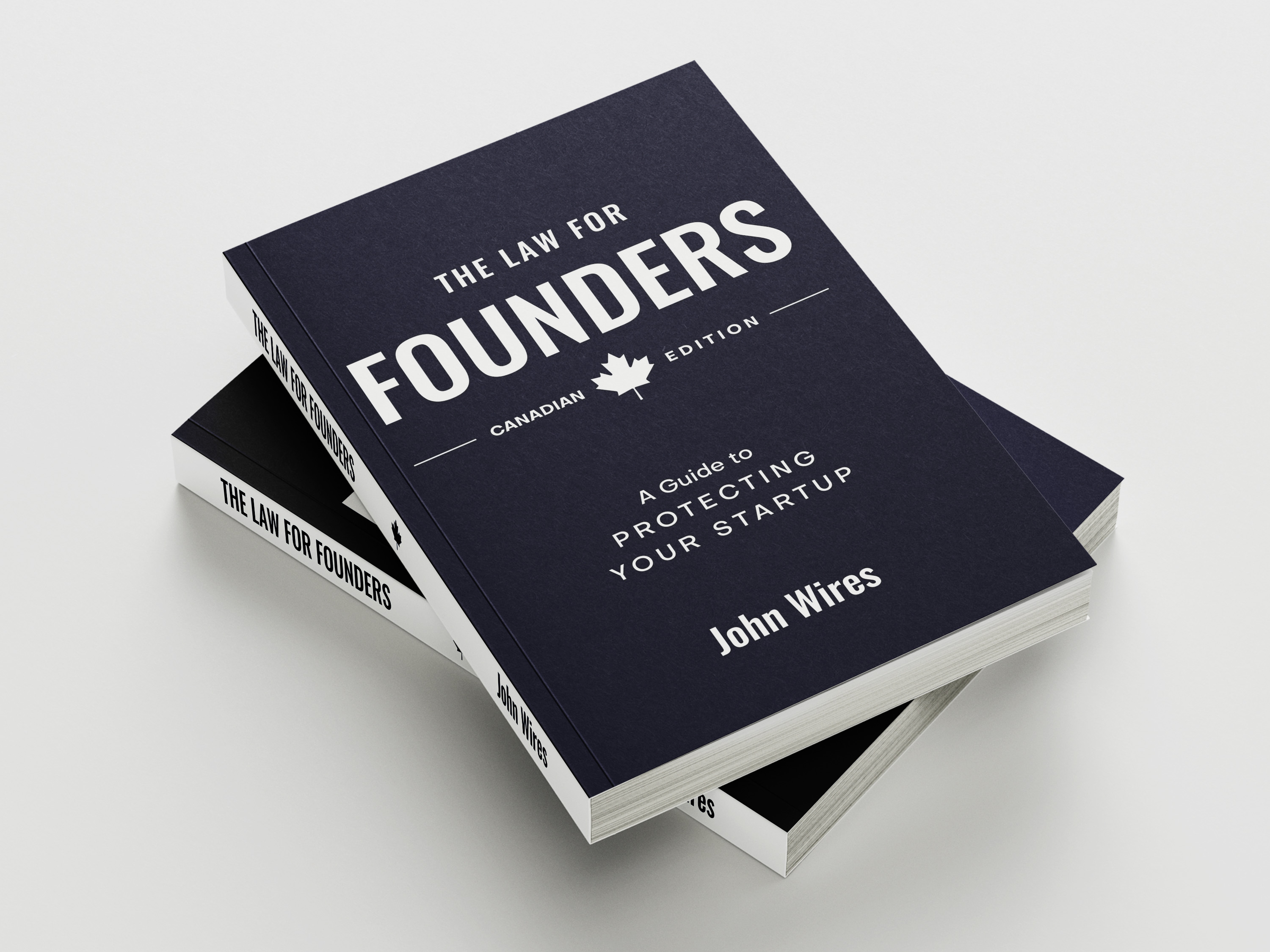
The Law for Founders
Our free book covers shareholder agreements, co-founder dynamics, equity splits, vesting and everything else founders need to know about structuring their business partnerships. Written in plain language by a lawyer who works with startups every day.