The Founders' Lawyer
Ontario Incorporation Services
Incorporating in Ontario under the OBCA is the right choice for many founders — especially international teams with no Canadian-resident directors. Here's how the process works and what's included.
Why incorporate in Ontario?
Ontario incorporation under the Ontario Business Corporations Act (OBCA) is a provincial incorporation — your corporation is created and registered with the Ontario government through ServiceOntario. It's a straightforward process with one major advantage that makes it the preferred choice for many founders.
No Canadian residency requirement for directors. This is the single biggest reason founders choose OBCA incorporation over federal incorporation. Under the CBCA, at least 25% of your directors must be resident Canadians. Under the OBCA, there is no such requirement. If your founding team is entirely based outside of Canada, or if you simply don't want to deal with the residency requirement, Ontario is the way to go.
Beyond the director flexibility, Ontario incorporation is a simpler process if you plan to operate exclusively in Ontario. There's no extra-provincial registration needed — you file once with the province and you're done. If you later decide to operate in other provinces, you can register extra-provincially at that time.
For a broader overview of the incorporation process and how we help, see our incorporation lawyer page.
The Process
Ontario incorporation step by step
From decision to fully set-up corporation, here's what the process looks like.
NUANS Name Search
If you want a named corporation, we run a NUANS search to confirm your proposed name is available and doesn't conflict with existing Ontario businesses or trademarks. If you're incorporating as a numbered company, this step is skipped entirely.
File Articles of Incorporation
We prepare and file your articles of incorporation with ServiceOntario, including your share structure, any restrictions or provisions in the articles and the classes of shares your corporation will be authorized to issue.
Certificate of Incorporation
ServiceOntario issues your certificate of incorporation, which is the official proof your corporation exists. Online filings are typically processed within a few business days.
Set Up the Minute Book
We prepare your complete corporate minute book: organizational resolutions, by-laws, director and officer appointments, registered office, share issuance to founders and all the foundational corporate records your company needs.
CRA Registration
We register your corporation with the Canada Revenue Agency to get your business number and any program accounts you need — corporate income tax, GST/HST, payroll and import/export accounts as applicable.
Post-Incorporation Guidance
We'll advise on next steps: whether you need a shareholder agreement, IP assignment agreements, employment contracts and how to keep your corporate records current going forward.
Ontario vs. Federal
When does Ontario incorporation make more sense?
Choose Ontario incorporation when: your directors are not Canadian residents (or you want flexibility on that front), you're operating exclusively in Ontario, you want a simpler process with no extra-provincial registration, or the director residency requirement under the CBCA is a deal-breaker for your founding team.
Consider federal incorporation when: you want nationwide name protection for your corporate name, you plan to operate in multiple provinces from the start, you're raising institutional capital (investors are more familiar with CBCA corporations), or you want the credibility signal of a federal corporation.
The cost difference between the two is minimal. The real decision comes down to director residency, name protection and your growth plans. We walk every client through both options during the initial consultation and recommend the structure that makes sense for their specific situation.
Share Structure
Getting your share structure right from the start
Your share structure is one of the most important decisions you'll make at incorporation. It affects tax planning, future fundraising, co-founder equity splits and the overall flexibility of your corporation. Getting it right from the start is far cheaper than restructuring later.
Common shares are the standard equity of the corporation. Common shareholders typically have voting rights, the right to receive dividends and the right to share in the corporation's assets on dissolution. Most founders hold common shares.
Preference shares (also called preferred shares) can be structured with specific rights and restrictions — dividend preferences, redemption rights, conversion rights, liquidation preferences. These are often used for investors, family members or specific tax planning strategies.
We advise on how many share classes to authorize, what rights and restrictions to attach to each class and how to structure things so you're ready for vesting, tax planning and future investment rounds. The goal is a share structure that works for where you are today and where you're headed.
Once your corporation is set up, if you have co-founders or multiple shareholders, the next step is a shareholder agreement to govern how the shares are managed, transferred and voted.
After Incorporation
Ongoing obligations for Ontario corporations
Incorporating is step one. Here's what you need to stay on top of going forward:
Annual returns. Ontario corporations must file an annual return with the Ontario government. Failure to file can result in your corporation being dissolved. This is a simple filing, but missing it has serious consequences.
Corporate information changes. If your directors, officers, registered office or corporate name change, you need to update ServiceOntario. Changes must be filed within the required timeframes.
Minute book maintenance. Your minute book should be kept current with records of all director and shareholder meetings, resolutions, share transfers and other significant corporate actions. A well-maintained minute book is essential for due diligence when you raise money or sell the business.
Tax filings. Your corporation files its own income tax returns with the CRA, separate from your personal returns. Get a startup-friendly accountant in place early — we're happy to make a referral.
Common Questions
Frequently asked questions
How much does it cost to incorporate in Ontario?
Our complete Ontario incorporation package is quoted at a fixed fee that includes the government filing fee, NUANS name search (for named corporations), a complete minute book, share issuance, organizational resolutions and CRA business number registration. Book a free consultation for a quote specific to your situation.
How long does it take to incorporate in Ontario?
Ontario incorporations filed through ServiceOntario are typically processed within a few business days. The full setup — including NUANS search, minute book, share issuance and CRA registration — usually takes a few business days once we have all the information we need from you.
Do I need a NUANS report for a numbered company?
No. If you incorporate as a numbered company (e.g., 1234567 Ontario Inc.), you skip the NUANS search entirely. This makes the process faster and less expensive. You can always register a trade name (business name) later if you want to operate under a specific brand name.
Can non-Canadians incorporate in Ontario?
Yes — and this is one of the biggest advantages of Ontario incorporation. The OBCA has no Canadian residency requirement for directors. Non-Canadian founders can incorporate in Ontario and serve as the sole directors. This is a key reason many international founders choose Ontario over federal incorporation, which requires at least 25% Canadian-resident directors.
What is the difference between OBCA and CBCA?
OBCA (Ontario Business Corporations Act) governs Ontario provincial corporations. CBCA (Canada Business Corporations Act) governs federal corporations. Key differences: OBCA has no director residency requirement; CBCA requires 25% Canadian-resident directors. CBCA gives nationwide name protection; OBCA is limited to Ontario. CBCA corporations must register extra-provincially in each province of operation. We'll help you choose the right structure during your free consultation.
Free Download
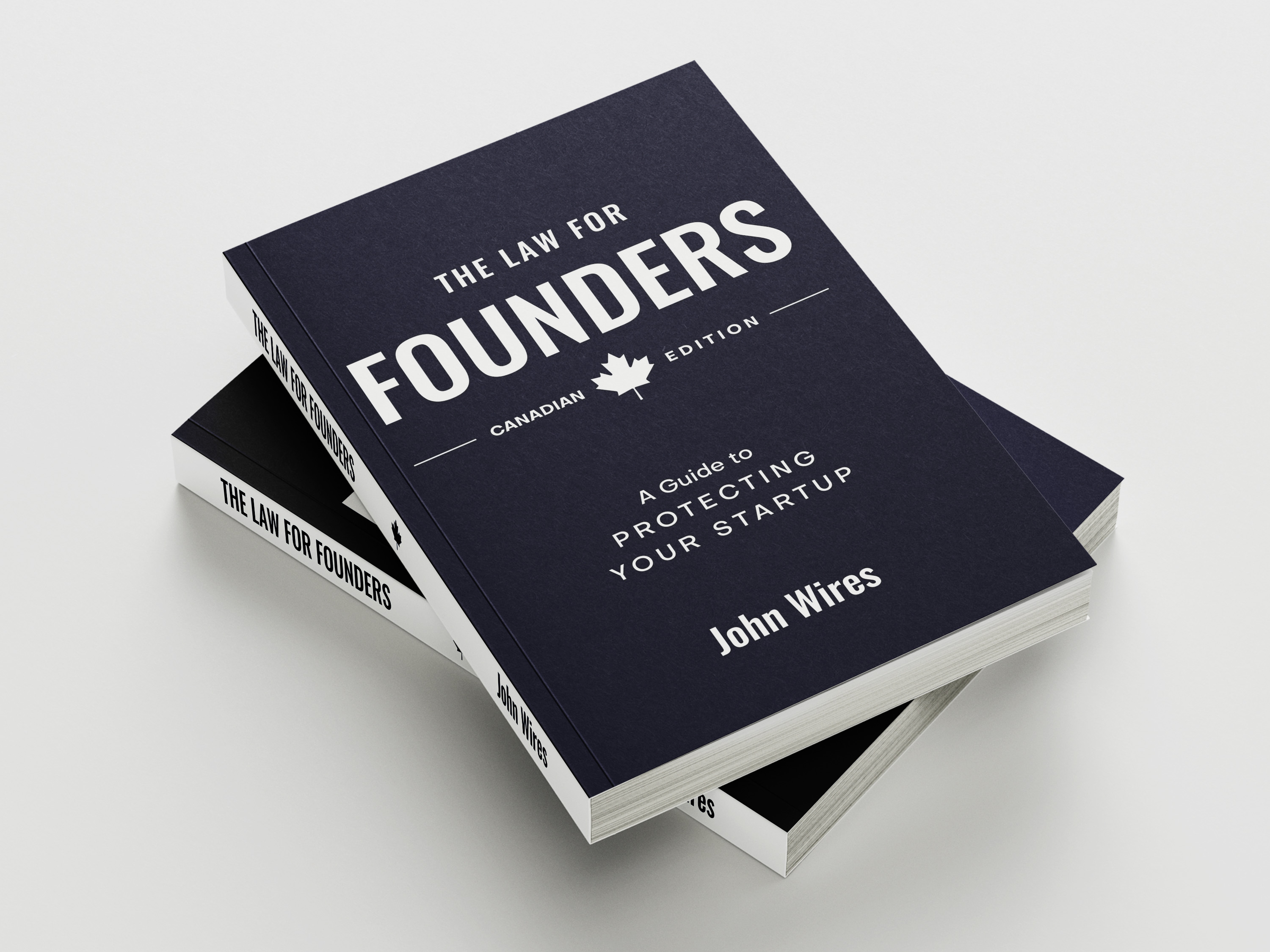
The Law for Founders
Our free book covers everything you need to know about incorporating in Ontario and across Canada — share classes, corporate structure, minute books, CRA registration and beyond. Written in plain language for founders, not lawyers.
Related Articles
How to Incorporate in Ontario: A Founder’s Guide
A step-by-step guide to incorporating in Ontario, from choosing a name and filing articles to setting up your minute book and issuing shares.
Federal vs Provincial Incorporation in Canada: Which Should You Choose?
A detailed comparison of federal and provincial incorporation in Canada, covering name protection, director residency, fees, and ongoing compliance.