The Founders' Lawyer
Incorporation Lawyer in Ontario
Your incorporation is the foundation of everything that follows. Get it right from the start with proper share structure, a complete minute book and an investor-ready setup. Fixed-fee pricing, no surprises.
Why use a lawyer instead of an online platform?
Platforms like Ownr and other online incorporation services will file your articles of incorporation. But filing the paperwork is only one piece of the puzzle — and often the least important one.
Here's the problem: online platforms give you a generic, one-size-fits-all corporate structure. They don't ask whether you need multiple share classes for tax planning. They don't set up vesting schedules for your co-founders. They don't think about whether your articles should include restrictions that make your shares eligible for the lifetime capital gains exemption. And they definitely don't consider how your share structure will look to investors when you go to raise money.
Structure matters. The decisions you make at incorporation — share classes, articles provisions, initial resolutions — follow your company for its entire life. Getting advice from a lawyer who incorporates startups every day means you get a structure that's designed for where you're going, not just where you are right now.
And the cost difference? Much smaller than most founders expect. Especially when you consider how much it costs to fix a bad corporate structure down the road.
What's Included
Everything you need to start your business
Our incorporation package covers the full setup — not just the filing.
Federal or Ontario Incorporation
Articles of incorporation filed under the CBCA (federal) or OBCA (Ontario), depending on what makes sense for your business. We'll advise you on which is the better fit.
NUANS Name Search
A NUANS search to confirm your proposed corporate name is available and doesn't conflict with existing businesses or trademarks in Canada.
Complete Minute Book
Organizational resolutions, by-laws, director and officer appointments, registered office address and all the foundational corporate records your company needs.
Share Issuance
Properly structured share classes and share subscriptions issued to founders. We design a share structure that supports tax planning, vesting and future investment.
CRA Business Number
Registration for your CRA business number, including GST/HST, payroll and corporate income tax accounts as needed.
Extra-Provincial Registration
If you incorporate federally, you'll need to register in Ontario (or your home province) to carry on business. We handle this registration as part of the process.
Federal vs. Ontario
CBCA vs. OBCA: which is right for your startup?
This is one of the first questions every founder asks, and there's no universal right answer. Here's the honest breakdown:
Federal incorporation (CBCA) gives you Canada-wide name protection, which means no other federally incorporated company can use the same name. It makes expanding to other provinces seamless and is generally the preferred choice for startups that plan to scale nationally or raise institutional capital. The tradeoff is that you need an extra-provincial registration to carry on business in Ontario, and at least 25% of your directors must be Canadian residents.
Ontario incorporation (OBCA) is simpler if you plan to operate only in Ontario. There are no Canadian residency requirements for directors, which matters for internationally distributed founding teams. It's a single filing with no extra-provincial registration needed for Ontario operations. The downside is that your name protection is limited to Ontario.
Most startups we work with choose federal incorporation. But we'll walk you through both options during your consultation and recommend the structure that fits your specific plans.
After Incorporation
What founders forget after incorporating
Incorporation is step one. Here's what comes next — and what most founders miss.
Shareholder Agreement
If you have co-founders, you need a shareholder agreement. Full stop. It covers equity, vesting, decision-making and what happens if someone leaves. This is the single most important document after your articles of incorporation.
IP Assignment
Any code, designs or content created before incorporation belongs to the individuals who created it — not the company. You need IP assignment agreements to transfer that intellectual property into the corporation.
Annual Filings
Federal corporations must file an annual return with Corporations Canada. Ontario corporations file with the provincial registry. Missing these filings can result in your corporation being dissolved. Mark your calendar.
Corporate Tax Setup
Your corporation needs to file its own tax returns, separate from your personal taxes. Get a startup-friendly accountant in place early. We're happy to make a referral.
Common Questions
Frequently asked questions
How much does it cost to incorporate in Ontario with a lawyer?
At wires/law, incorporation is quoted at a fixed fee that includes the articles of incorporation, NUANS name search, a complete corporate minute book, share issuance, organizational resolutions and CRA business number registration. We provide a quote upfront before any work begins. Book a free consultation for a quote specific to your situation.
How long does it take to incorporate?
A federal incorporation under the CBCA can often be completed within a few business days once we have all the information we need. Ontario provincial incorporations have similar timelines. The NUANS name search report is usually available within hours. We work to get your incorporation done quickly so you can move forward with your business.
Can a non-Canadian founder incorporate in Ontario?
Yes. Non-residents can incorporate federally under the CBCA, though at least 25% of directors must be Canadian residents. Ontario corporations under the OBCA have no Canadian residency requirements for directors. We regularly help international founders set up Canadian corporations and can advise on the best structure for your situation.
Should I incorporate or stay as a sole proprietorship?
For most startups, incorporating is the better choice. A corporation provides limited liability protection, allows you to issue shares to co-founders and investors, offers potential tax advantages and gives your business more credibility. Sole proprietorships expose your personal assets to business liabilities and make it impossible to bring on equity partners.
Do I really need a lawyer to incorporate?
You can file the paperwork yourself or use an online platform, but incorporation is about more than just filing forms. Share classes, articles provisions and corporate structure have long-term consequences for taxes, fundraising and co-founder relationships. A lawyer ensures your incorporation is set up properly from the start — which is far cheaper than fixing problems later.
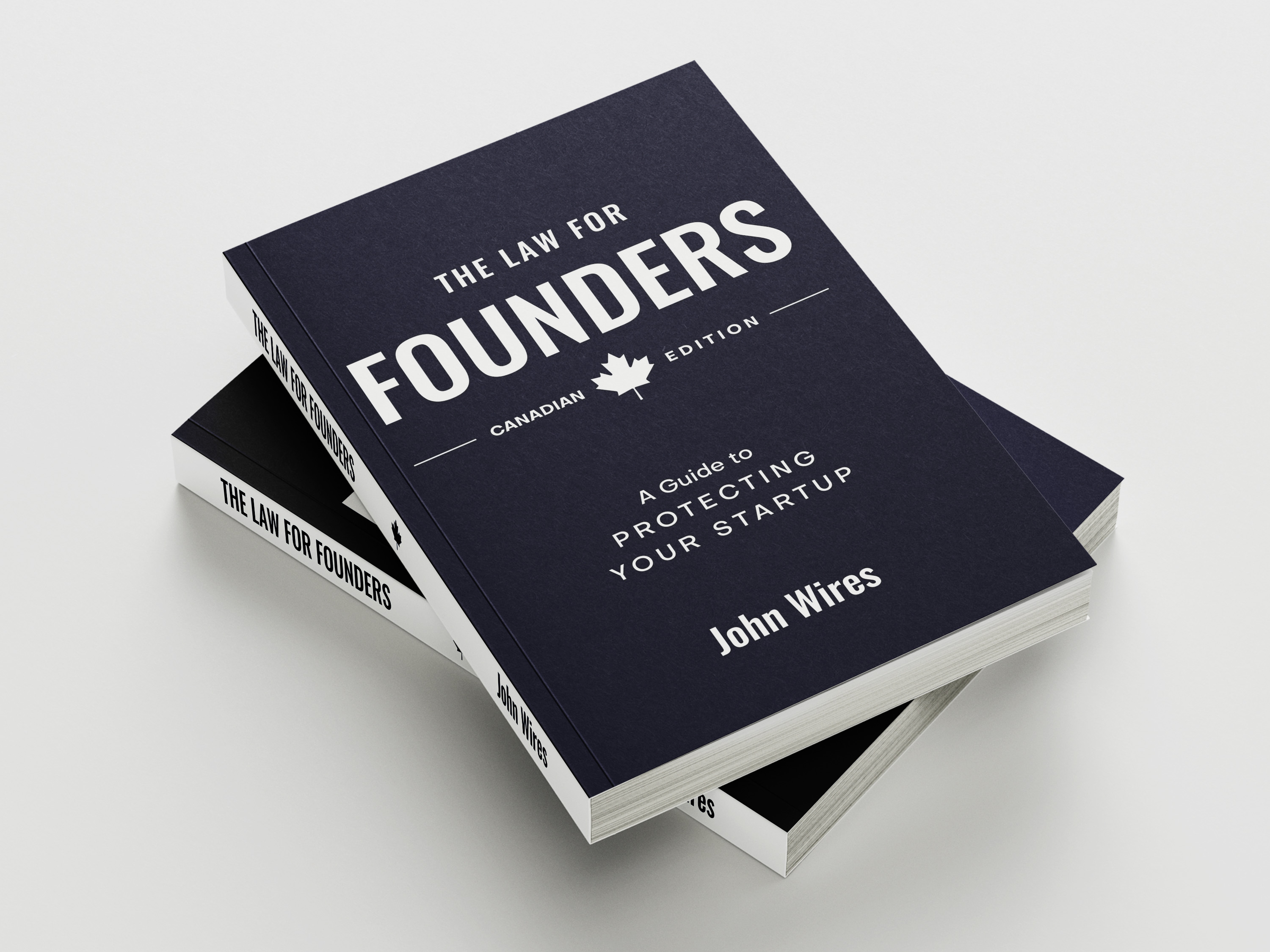
Free Download
The Law for Founders
Our free book covers everything you need to know about incorporating in Canada — share classes, minute books, CRA registration and beyond. Written in plain language for founders, not lawyers.