The Founders' Lawyer
Founders Agreement for Canadian Startups
A founders agreement is the most important legal document for any multi-founder startup. It defines the partnership before the partnership gets complicated. Get it right from the start.
Why every multi-founder startup needs a founders agreement
You've found your co-founder. You're both excited about the idea. You're ready to start building. This is the moment — before anyone writes a line of code, before anyone quits their job, before any money changes hands — to put your agreement on paper.
A founders agreement (sometimes called a co-founder agreement) is a contract between the people who are starting a business together. It covers the fundamental questions that every co-founder relationship needs to answer: who owns what, who does what, what happens if someone leaves and how decisions get made when you disagree.
Most co-founder breakups don't happen because people are dishonest. They happen because people assumed they were on the same page and never checked. One founder thought equity was split equally; the other thought it should be based on contribution. One assumed they'd both be working full-time; the other planned to keep their day job for six months. These are the misunderstandings that destroy startups — and they're entirely preventable.
The conversation about a founders agreement is one of the most important conversations you'll ever have about your business. If you can't agree on the terms of your partnership, that tells you something valuable before you've invested years of your life.
Key Provisions
What goes into a founders agreement
Every founders agreement should address these core topics. Skipping any of them is an invitation for conflict later.
Equity Split
How ownership is divided among co-founders. This is the hardest conversation and the most important one. Consider each person's contribution — capital, expertise, time commitment, existing IP — and have an honest discussion about what's fair.
Vesting Schedule
Vesting means equity is earned over time. The standard is a four-year vesting period with a one-year cliff — meaning no equity vests until you've been in for a full year. This protects everyone: if a co-founder leaves after three months, they don't walk away with a third of the company.
IP Assignment
All founders must assign their intellectual property to the corporation. Any code, designs, research or ideas that relate to the business need to be owned by the company, not by the individuals. Without this, a departing founder could claim they own the technology the business is built on.
Roles & Decision-Making
Who is the CEO? Who handles product, sales, technology? How are decisions made — unanimous agreement, majority vote, or specific authority for specific areas? Clear roles prevent stepping on each other's toes and ensure the company can move fast.
Departure Provisions
What happens when a co-founder leaves — voluntarily or otherwise. A "good leaver" (relocating, health issues) might keep their vested equity. A "bad leaver" (starting a competitor, getting fired for cause) might forfeit some or all of it. These provisions need to be defined upfront.
Non-Compete & Expenses
Restrictions on competing during and after the partnership, provisions for how expenses are handled before the company generates revenue and whether founders receive compensation. Sweat equity arrangements and deferred salary agreements also belong here.
Founders Agreement vs. Shareholder Agreement
How a founders agreement relates to a shareholder agreement
In practice, a founders agreement and a shareholder agreement are closely related — and they're often combined into a single document.
A founders agreement typically covers the pre-incorporation stage. It's the initial handshake on paper: who gets what, who does what and what happens if things don't work out. It's designed for the earliest days of a startup, before the corporation even exists.
A shareholder agreement governs the ongoing relationship between shareholders of an incorporated company. It covers many of the same topics — equity, voting, transfers, exits — but within the formal corporate structure.
Many startups we work with incorporate right away and go directly to a shareholder agreement that includes all the founders agreement provisions. If you're incorporating at the same time as formalizing your co-founder relationship, there's no need for two separate documents. We'll draft a comprehensive shareholder agreement that covers everything.
If you're not ready to incorporate yet but want to formalize your co-founder relationship, a standalone founders agreement is the right choice. It can be drafted now and then superseded by a shareholder agreement when you incorporate.
Real Talk
Why co-founder breakups happen — and how the agreement protects everyone
Co-founder breakups are one of the leading causes of startup failure. And they almost always stem from the same handful of issues: unequal effort, different visions for the company, personal circumstances that change, or money pressures that create resentment.
A founders agreement doesn't prevent disagreements. But it gives you a framework for resolving them. When one founder wants to go full-time and the other doesn't, the agreement defines what that means for equity. When one founder wants to pivot and the other doesn't, the agreement defines how that decision gets made. When one founder wants out, the agreement defines the process — cleanly, fairly and without litigation.
The founders who get through the hard moments are the ones who planned for them. Not because they expected things to go wrong, but because they respected the partnership enough to build a solid foundation. A founders agreement is that foundation.
Common Questions
Frequently asked questions
Do we need a founders agreement if we trust each other?
Yes. A founders agreement isn't a sign that you don't trust each other — it's a sign that you take the business seriously. Trust doesn't survive every scenario. Circumstances change, priorities shift and what felt obvious at the start becomes ambiguous two years in. The agreement protects the relationship by giving everyone clear expectations from day one.
How much does a founders agreement cost?
At wires/law, founders agreements are quoted at a fixed fee before work begins. The cost depends on the number of co-founders and the complexity of your arrangement. Many startups combine the founders agreement with a shareholder agreement at incorporation, which is more efficient than doing them separately. Book a free consultation for a quote.
When should we sign a founders agreement?
Before writing a single line of code, before spending money on the business and before anyone contributes meaningful work. The ideal time is at the very beginning, when everyone is aligned and willing to be fair. The longer you wait, the harder the conversation gets — especially once someone feels they've contributed more than their fair share.
What's the difference between a founders agreement and a shareholder agreement?
A founders agreement covers the pre-incorporation stage and addresses initial co-founder terms. A shareholder agreement governs the ongoing relationship between shareholders of an incorporated company. In practice, many startups combine both into a single comprehensive shareholder agreement at the time of incorporation.
Can we change a founders agreement later?
Yes, with the agreement of all parties. As the business evolves — new co-founders, investors, pivots — you may need to update terms. Having an agreement in place gives you a framework to work from rather than starting from scratch each time circumstances change.
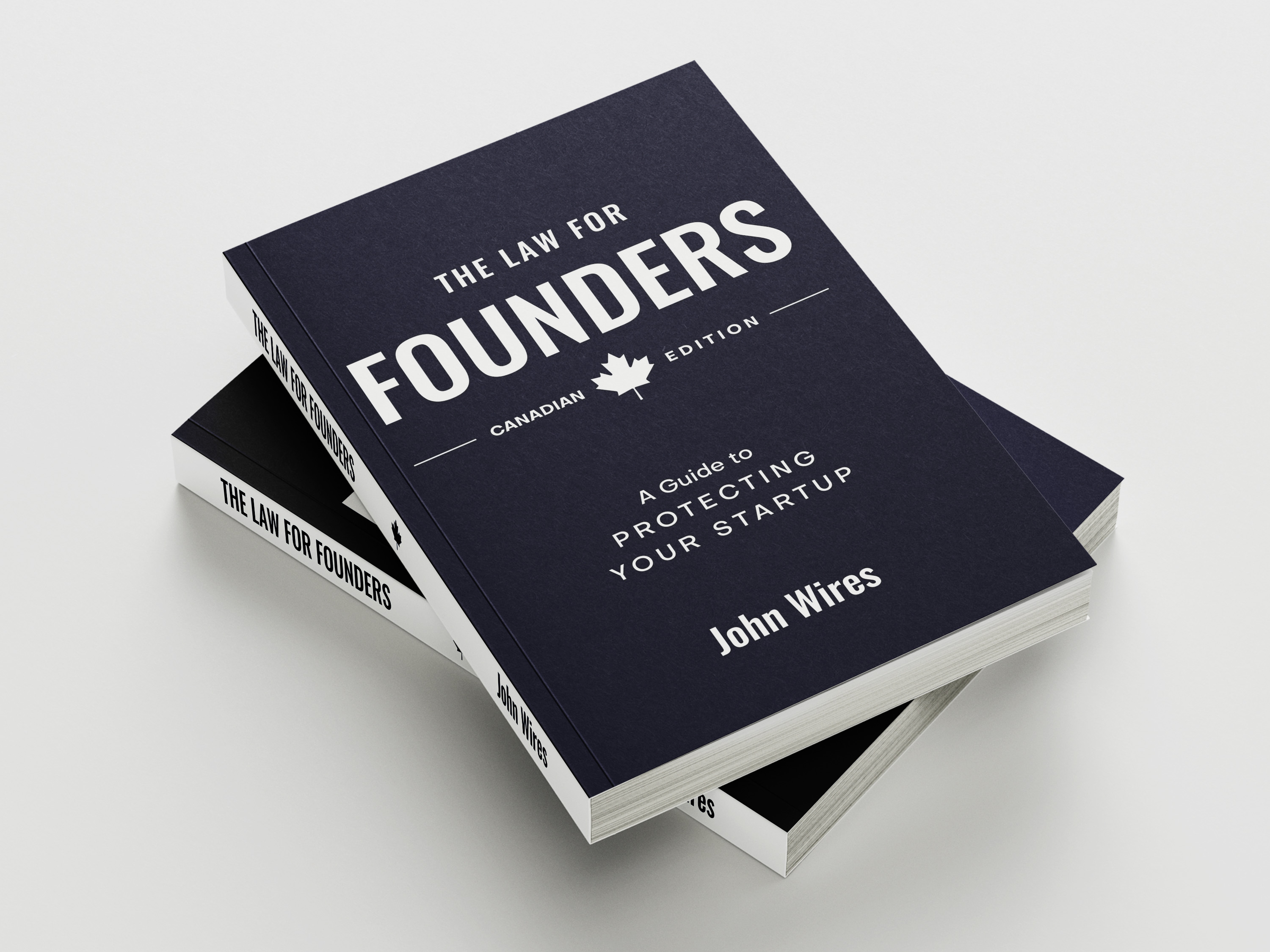
Free Download
The Law for Founders
Our free book covers co-founder agreements, equity splits, vesting, IP assignment and all the legal fundamentals every founding team needs to understand. Written in plain language by a lawyer who works with startups every day.